
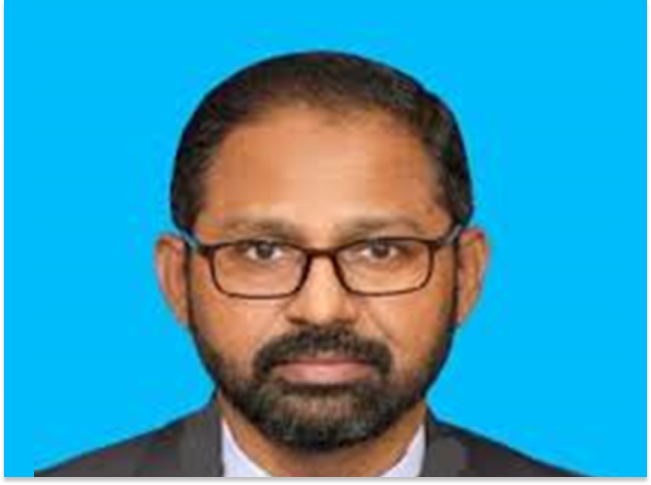
Thirunaukarasu Subramaniam
Thirunaukarasu Subramaniam obtained his PhD in Economics from Universiti Putra Malaysia in 2008. He obtained his Masters of Commerce (Economics) from University of Wollongong, New South Wales, Australia in 1997. Currently, he is working as Associate Professor at the Department of Southeast Asian Studies, Faculty of Arts and Social Sciences, Universiti Malaya, Kuala Lumpur. His research areas are concentrated mainly in Labour Economics and Development Economics. In 2014, Malaysian Ministry of Higher Education awarded him a two-year post-doctoral scholarship to do research at the University of Warwick, United Kingdom.
Follow Thirunaukarasu on
Website
Follow Thirunaukarasu on
Website
Thirunaukarasu Subramaniam obtained his PhD in Economics from Universiti Putra Malaysia in 2008. He obtained his Masters of Commerce (Economics) from University of Wollongong, New South Wales, Australia in 1997. Currently, he is working as Associate Professor at the Department of Southeast Asian Studies, Faculty of Arts and Social Sciences, Universiti Malaya, Kuala Lumpur. His research areas are concentrated mainly in Labour Economics and Development Economics. In 2014, Malaysian Ministry of Higher Education awarded him a two-year post-doctoral scholarship to do research at the University of Warwick, United Kingdom.
In their own words…
IEA – Could you walk us through the key moments that shaped your path from your earliest exposure to economic thinking to what sparked your interest in the field, and ultimately what drew you to academic research?
Thirunaukarasu – During high school, I took Economics and this subject interested me most. Given that I like Mathematics, I found learning Economics exciting. Subsequently, I majored in Economics during my undergraduate studies and eventually ended up as an Economics teacher in a secondary school. When the opportunity arose for me to study Masters of Commerce (Economics) in 1996 at the University of Wollongong, New South Wales, Australia, I grabbed it. This is when my interest in Economics blossomed, as my lecturers were able to apply Economics to real-life events. I majored in Monetary and Labour Economics. But somehow, I was more drawn to Labour Economics and eventually did a PhD in Economics with an emphasis on Labour Economics in a Malaysian public university. As I am in academia, research is an integral component. I credit the drive to research and publish to my present institution. Research grants awarded expect one to publish tangible outputs. I also started receiving doctoral students worldwide in different areas of economic research, including Labour Migration.
IEA – In your paper on skills acquisition and employability among arts and social sciences interns, what were the main disconnects you found between university education and industry needs? What steps can higher education institutions take to better prepare students for today’s job market?
Thirunaukarasu – The fundamental problem we have in Malaysia is that arts and social sciences graduates normally face more difficulty in employability compared to other fields of studies. This paper (joint with Mythili Monogaran) explores the gap between the skills that the arts and social sciences interns possess and what the employers want them to have. It is essential to identify these gaps as they provide room to improve programs offered in a universities. The main gaps found are in essential skills such as ‘values, attitudes, and professionalism’, ‘problem-solving and scientific skills’, and ‘communication, leadership, and team skills’. Moving ahead, these three skills are essential to enhance employability. Given that the Malaysian public sector is saturating, job opportunities are abundant in the private sector. To ensure employability among public university graduates, those three skills need to be polished and enhanced, as these are the skills the private sector employers look for. These skills can be imparted by embedding them in the teaching and learning process. It can take various forms, either through assignments, group work, or even through examination questions.
IEA – Building on your study “COVID-19 and Wages and Salaries Dynamics in Malaysia: A Blessing in Disguise?” how have wage trends evolved in the post-pandemic period? Are these changes shaping long-term trends in the labor market, or do they appear to be short-lived adjustments?
Thirunaukarasu – Drawing upon a large sample size (29,633 in 2019 and 29,627 in 2020), this paper (joint with Martin O’Brien and Norma Mansor) uncovers the impact of the pandemic on the wage gap. We found that male-female and urban-rural wage gaps shrunk between 2019 and 2020, hence representing a blessing in disguise. This phenomenon is unique during the pandemic, and this trend is short-lived (temporary). Once the economy recovers, the previous trend is expected to re-emerge. While efforts are undertaken to minimise the gap, the pandemic brought a “natural adjustment” and a “temporary halt” to the ever-increasing wage gaps. The increasing male-female wage gap is also due to women leaving the labour market earlier than men, preventing them from holding high-paying jobs. In the Malaysian context, attachment to the labour market among women seems to be shorter, partly due to childcare responsibilities. Likewise, the urban-rural wage gap is caused by the fact that high-paying jobs are mainly available in urban areas, where businesses and industries are located. To reiterate, as the economy picks up, the trend before the pandemic is very likely to re-emerge, and the gap is likely to grow.
IEA – Based on your research, how do factors like peer networks, workplace norms, and community ties influence the mental health and overall well-being of Bangladeshi migrant workers in Malaysia?
Thirunaukarasu – This is a unique research (joint with Md. Mohsin Reza and M. Rezaul Islam) which investigates Bangladeshi migrant workers’ well-being in the Malaysian construction sector. The 3D (dirty, dangerous, and difficult) nature of this type of employment causes Malaysians to shy away, but Bangladeshi migrant workers perceive those jobs as a gold mine. Migrant workers generally face two types of costs, namely financial cost and psychosocial cost. The former erodes their economic well-being, while the latter erodes their social well-being. Economic well-being in this research is measured through consumption flow, wealth stock, equality, and economic security. Amongst these, economic security is found to be the lowest among migrant workers. What is revealed is that they are willing to work long hours, causing an erosion of their health-related well-being (a subset of social well-being), but at the same time, the expected return from working long hours provides them with more economic security and hence improved economic well-being. These two types of well-being are paradoxical, but the economic security they get and the resulting economic well-being attained outweigh the erosion in health-related well-being.
On the other hand, social well-being in this research is measured through social contribution, social actualization, social coherence, social integration, and social acceptance. Out of these, social integration was less significant. Even though migrants feel that the local society values them as a person, they also feel a lack of belonging in the local community and that they are not part of the local community. However, for social acceptance, generally, migrant workers feel that the local community is trustworthy, reliable, caring, and kind, and these qualities improve their mental and overall well-being. It is important to note that we often exclude psychosocial costs from migration costs as it is difficult to measure. In actuality, it forms a substantial component of their mental health well-being due to separation from loved ones and workplace stress. The presence of peer networks, to a certain extent, minimizes the psychological cost. Likewise, favourable workplace conditions improve the mental health of migrant workers and their overall well-being. In contrast, failure to follow workplace norms, such as the need to follow rules and regulations, may cause workplace injury, which reduces their health, social, economic, and overall well-being.
IEA – How has your personal background influenced your research perspectives? What practical steps do you think the economics field should take to become more inclusive and better reflect diverse global challenges?
Thirunaukarasu – My ancestors came to erstwhile Malaya in 1935 as migrant workers. They worked as coolies in rubber plantations, like many Indians in Malaysia. Perhaps the sense of being a labourer in the past and the present-day plights of labourers that toil for a living caused me to find my niche in this research area. To be more inclusive, we need to stress the importance of valuing those who are deprived. In the case of migrant workers, we often forget that they make huge sacrifices to leave their home country. These sacrifices can take various forms such as familial relationship, financial, social, life comfort, and daily consumption. Once we value their sacrifices, we will be appreciative of their presence in the host countries. My increased understanding of the nature of the sacrifice made by migrant workers personally has caused me to be appreciative of migrant workers in Malaysia. While minimum wages apply to migrant workers beginning 1 February 2025, to be more inclusive, Malaysia as a whole can do more to improve their well-being, especially in relation to their welfare and acceptance by the community. More affirmative actions are also needed at the national level to include minority groups in the mainstream economy.