
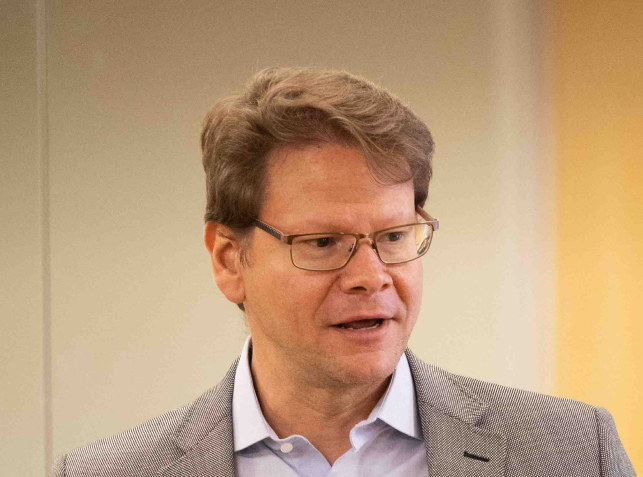
Rafael Dix-Carneiro
Rafael Dix-Carneiro is Professor of Economics at Duke University, where he specializes in international trade, labor economics, and economic development. His research examines how globalization, trade policy, and domestic institutions shape labor markets, inequality, informality, and regional development, with a particular focus on emerging economies. His work has been published in leading journals, including Econometrica, the American Economic Review, and the Quarterly Journal of Economics. He is a Research Associate at the National Bureau of Economic Research (NBER), an Associate Editor of the Journal of International Economics and Quantitative Economics, and a Research Affiliate of BREAD and the International Growth Centre. Originally from Brazil, he received his PhD in Economics from Princeton University after studying electrical engineering and mathematics.
Follow Rafael on
Website
Follow Rafael on
Website
Rafael Dix-Carneiro is Professor of Economics at Duke University, where he specializes in international trade, labor economics, and economic development. His research examines how globalization, trade policy, and domestic institutions shape labor markets, inequality, informality, and regional development, with a particular focus on emerging economies. His work has been published in leading journals, including Econometrica, the American Economic Review, and the Quarterly Journal of Economics. He is a Research Associate at the National Bureau of Economic Research (NBER), an Associate Editor of the Journal of International Economics and Quantitative Economics, and a Research Affiliate of BREAD and the International Growth Centre. Originally from Brazil, he received his PhD in Economics from Princeton University after studying electrical engineering and mathematics.
In their own words…
IEA – Could you walk us through the key moments that shaped your path – from your earliest exposure to economic thinking to what sparked your interest in the field, and ultimately what drew you to academic research?
Rafael – My path into economics was largely unplanned. I studied engineering as an undergraduate and then mathematics during my master’s degree. My interest in economics began to take shape while I was working on projects related to electricity auctions. At the same time, my master’s advisor, Aloísio Araújo, strongly encouraged me to apply for a PhD in economics rather than in operations research, which had initially been my first choice. Before then, I had had very little exposure to economics.
Fortunately, I fell in love with the field during my PhD. I discovered that economics offered the perfect opportunity to put my mathematical and computational training to good use while addressing important real-world questions.
What I enjoy most about academic research is that it is a continuous learning process. Every new project begins with a sense of uncertainty: you never know whether the idea will work or where it will lead. That uncertainty can be challenging and unsettling, but it also makes the eventual breakthroughs incredibly rewarding. Few things are as satisfying as seeing a difficult research project finally come together.
IEA – In your research on labor market responses to tariffs, you show that workers often face prolonged adjustment due to labor market frictions. As tariffs regain prominence in global trade policy, what lessons should policymakers draw to protect workers without undermining the broader gains from trade?
Rafael – Economists have long recognized that trade liberalization and globalization create both winners and losers. For many years, however, the prevailing view was that the distributional effects were relatively small compared with the overall gains from trade. Over the past two decades, we have learned that this is not always the case. The distributional consequences of globalization can be substantial, with important economic, social, and political implications. As a result, many countries have experienced a backlash against globalization and a resurgence of protectionist policies.
The key lesson for policymakers is that promoting globalization and protecting workers should not be seen as conflicting objectives. Governments need to acknowledge that some workers and firms will be adversely affected by increased international competition and should complement open trade policies with measures that help ease the adjustment process. If globalization is to remain politically and socially sustainable, its benefits need to be more broadly shared.
In a recent paper for the Journal of Economic Perspectives, co-authored with Brian Kovak, we discuss several policies that can facilitate adjustment while preserving the gains from trade. These include effective retraining programs, wage insurance for displaced workers, subsidies that encourage job search and geographic mobility, gradual tariff reductions that give workers and firms time to adapt, and labor market policies that make it easier for workers to move into new opportunities. The goal should not be to prevent economic change, but to help workers and firms navigate it successfully.
IEA – Your research on Trade and Domestic Distortions: The Case of Informality shows that trade liberalization alone cannot deliver its full benefits when domestic distortions keep firms in the informal sector. In your view, should policymakers prioritize trade liberalization or domestic structural reforms first, or must the two go hand in hand?
Rafael – Many developing countries, including Brazil, impose regulations that can be very burdensome on firms, such as high taxes and rigid labor market rules. At the same time, they often have limited capacity to enforce them. As a result, many smaller and less productive firms choose to operate informally, avoiding taxes and regulations.
This creates a highly inefficient allocation of resources. The informal sector, which is typically less productive, is effectively subsidized through weak enforcement and therefore overproduces relative to the social optimum. Meanwhile, the more productive formal sector bears heavier regulatory and tax burdens and underproduces. The result is substantial misallocation that reduces aggregate productivity and real income.
In recent work with co-authors, published in Econometrica, we show that trade liberalization can partially offset these domestic distortions. By increasing wages and labor productivity, it shifts resources away from less productive informal firms toward more productive formal ones. The gains from trade turn out to be more than twice as large as the traditional gains, because liberalization not only generates the usual efficiency gains, it also helps correct an important domestic distortion. In that sense, trade liberalization may be a particularly attractive policy in many developing countries.
That said, there is an important caveat. Our work abstracts from the transition between the old and the new equilibrium. In practice, some of my previous work has shown that adjustment to trade can be lengthy and painful, especially for lower-skilled workers, who are disproportionately employed in the informal sector. Understanding how workers move from shrinking informal firms to expanding formal ones is therefore essential for designing policies that balance efficiency with equity. This is precisely the question I am currently studying.
Trade liberalization is an important step for many developing countries seeking faster productivity growth and higher standards of living. However, it is not sufficient on its own. In many middle-income countries, burdensome tax systems and regulations give rise to large informal sectors and significant resource misallocation. While trade liberalization can partly alleviate these distortions, it cannot eliminate them. An important challenge for both researchers and policymakers is to design reforms that reduce informality and improve productivity while avoiding unintended consequences, such as higher unemployment.
IEA – Drawing on your review of globalization and inequality in Latin America, what lessons from the region’s experience should countries keep in mind as they navigate today’s more fragmented global economy?
Rafael – One important lesson from Latin America is that the distributional consequences of globalization are much richer than economists typically consider. The effects differ across regions, firms, industries, and workers. They extend well beyond wages and employment to include education, crime, health, and political outcomes, and they unfold over many years. In Brazil, for example, the regional wage effects of the trade liberalization of the early 1990s were about three times larger fifteen years after the reform than they were after five years. At the same time, the country’s large informal sector became an important margin of adjustment, with many displaced workers in regions specialized in import-competing industries eventually moving into informal employment. More broadly, Latin America’s experience shows that labor market institutions play a central role in shaping how economies adjust, influencing not only the speed of adjustment but also whether workers move into unemployment, informality, or new productive opportunities.
More broadly, our review argues that there is no single measure of globalization’s distributional impact. Different studies emphasize different dimensions of inequality, often using frameworks that are difficult to reconcile, making it hard to aggregate their findings into an overall assessment.
The broader lesson is that globalization cannot be evaluated simply by its aggregate gains. Countries need to understand who benefits, who bears the adjustment costs, and how institutions shape those outcomes. This is not only a question of fairness. Trade shocks have also affected political outcomes in countries such as Brazil and Mexico. Policies that facilitate adjustment and spread the gains more broadly are essential if globalization is to remain politically sustainable.
IEA – How has your personal background influenced your research perspectives, and what concrete steps do you think the economics field should take to become more inclusive?
Rafael – I was born and raised in Brazil, and my upbringing has had a profound influence on my research agenda. Many of the topics I have studied, including the effects of trade liberalization, inequality, informality, and crime, reflect challenges that I witnessed firsthand growing up. Trade liberalization, for example, was a major transformation in Brazil during my childhood and teenage years, and understanding its consequences became one of the central questions of my academic career. As a result, much of my research has focused on Brazil.
More broadly, I believe that many of the most important questions in economics today arise in developing countries. Issues such as informality, tax evasion, urbanization, access to quality education, and access to good jobs affect billions of people and remain only partially understood.
For the economics profession to become more inclusive, I think it is essential to encourage and support researchers from a wider range of countries and backgrounds. Economists who are deeply familiar with the institutions, history, and culture of their own countries are often best positioned to identify important questions and develop policies that are relevant to local realities. Increasing diversity within the profession is therefore not only a matter of fairness. It also broadens the set of questions we study and ultimately leads to better economics.