
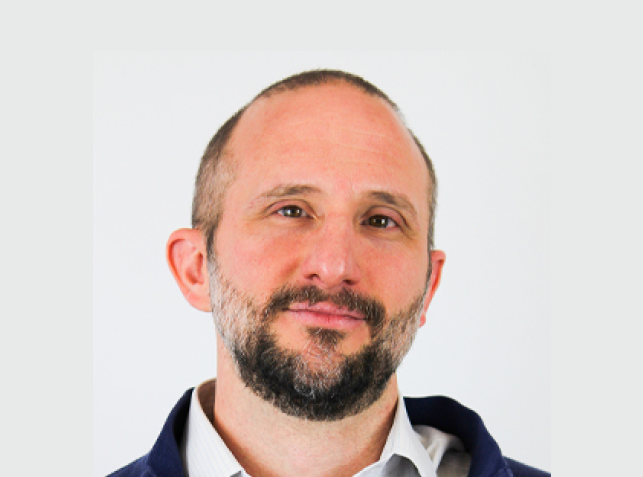
Horacio Larreguy
Horacio Larreguy is an Associate Professor of Economics and Political Science at the Instituto Tecnológico Autónomo de México (ITAM). He received his Ph.D. in Economics from MIT and was an Assistant and Associate Professor of Government at Harvard University. Horacio is an Abdul Latif Jameel Poverty Action Lab (J-PAL) affiliated professor, CesIfo research fellow, and an Evidence in Governance and Politics (EGAP) member. His research is on political economy and development, mostly in Latin America and Sub-Saharan Africa. He has particularly worked on the importance of information for political accountability, vote buying, and when education fosters political participation. More recently, motivated by the COVID-19 infodemic and increasing political polarization, he has implemented various projects on misinformation and accountability under polarization in Bolivia, Finland, Kenya, Latvia, Mexico, South Africa, Turkey, and Zimbabwe. Horacio’s methodological focus is on causal identification using both observational and experimental data, and whenever possible, he uses social network analysis. He has conducted large-scale experiments in Australia, Bolivia, Egypt, Kenya, Liberia, Mexico, Morocco, Senegal, South Africa, Turkey, Uganda, and Zimbabwe. Horacio has published at the AEJ: Applied Economics, American Political Science Review, American Journal of Political Science, Econometrica, Economic Journal, Journal of Politics, Journal of the European Economic Association, Nature Human Behavior, PLoS ONE, Review of Economic Studies, Review of Economics and Statistics, Science Advances, among other journals. Horacio has served as a consultant for various international organizations and is currently an Associate Editor of the Economic Journal.
Follow Horacio on
Website
Follow Horacio on
Website
Horacio Larreguy is an Associate Professor of Economics and Political Science at the Instituto Tecnológico Autónomo de México (ITAM). He received his Ph.D. in Economics from MIT and was an Assistant and Associate Professor of Government at Harvard University. Horacio is an Abdul Latif Jameel Poverty Action Lab (J-PAL) affiliated professor, CesIfo research fellow, and an Evidence in Governance and Politics (EGAP) member. His research is on political economy and development, mostly in Latin America and Sub-Saharan Africa. He has particularly worked on the importance of information for political accountability, vote buying, and when education fosters political participation. More recently, motivated by the COVID-19 infodemic and increasing political polarization, he has implemented various projects on misinformation and accountability under polarization in Bolivia, Finland, Kenya, Latvia, Mexico, South Africa, Turkey, and Zimbabwe. Horacio’s methodological focus is on causal identification using both observational and experimental data, and whenever possible, he uses social network analysis. He has conducted large-scale experiments in Australia, Bolivia, Egypt, Kenya, Liberia, Mexico, Morocco, Senegal, South Africa, Turkey, Uganda, and Zimbabwe. Horacio has published at the AEJ: Applied Economics, American Political Science Review, American Journal of Political Science, Econometrica, Economic Journal, Journal of Politics, Journal of the European Economic Association, Nature Human Behavior, PLoS ONE, Review of Economic Studies, Review of Economics and Statistics, Science Advances, among other journals. Horacio has served as a consultant for various international organizations and is currently an Associate Editor of the Economic Journal.
In their own words…
IEA – Could you walk us through the key moments that shaped your path from your earliest exposure to economic thinking to what sparked your interest in the field, and ultimately what drew you to academic research?
Horacio – I first chose economics almost out of rebellion. I loved physics—thanks to all the IB experiments and the math behind them—but I had also taken a high school economics class that intrigued me. The night before declaring my major, I asked my mom’s advice; she said physics, since economics was a “lesser science.” That was all the motivation I needed. I had always liked the idea of a PhD without knowing what it really meant, but I only discovered research late. At the University of Buenos Aires, most of my professors focused on teaching, and I was working in consulting at the same time, which left little space for research.
I went to CEMFI for my master’s mainly to follow someone I loved to Europe. My thesis there—a clumsy game-theoretic model of contracting institutions—was my first real research project, and I loved it. Arriving at MIT, I planned to be an applied theorist until Daron gently told me it wasn’t my comparative advantage. Though tough to hear, I remain grateful: that nudge pushed me into applied work, which has become one of the great passions of my life.
IEA – Your study shows that high-saturation, non-partisan Facebook ad campaigns in Mexico improved electoral accountability, with effects amplified in more socially connected areas. How does digital saturation interact with offline networks to shape political outcomes, and what can this tell us about designing effective information interventions?
Horacio – This is an excellent question. We concentrate on the relationship between saturation and social media connectedness because that is measurable; however, we anticipate that online and offline networks are highly correlated and equally significant. In our study, “Information Provision, Voter Coordination, and Electoral Accountability: Evidence from Mexican Social Networks” published at the APSR, we demonstrate the importance of family networks in shaping political outcomes in rural areas. At the municipal level—and even more so in urban areas—while these networks can be constructed, they often do not serve as meaningful measures of offline social connectedness. Nonetheless, this does not imply that offline networks are unimportant. To the extent that they can be measured, such as indirectly through social capital measures, these should definitely be taken into account since high offline social connectedness requires a lower saturation for campaigns to be effective.
IEA – Your work on Mexico’s land allocation program during the 1960s shows that clientelist incumbents may weaken state capacity when their political dominance is threatened. What does this suggest about the tension between political competition and state-building, and how might these dynamics play out in other countries today?
Horacio – Another excellent question. It is true that incumbents may face perverse incentives to underinvest in state capacity. Yet competing interests can still motivate them. For instance, in ongoing work (Breaking Clientelism or Rewarding Incumbents? Evidence from an Urban Titling Program in Mexico), we find that short-term electoral gains may encourage incumbents to support programmatic policies that reduce future opportunities for clientelism. Similarly, Anderson Frey’s Strategic Allocation of Irrevocable and Durable Benefits shows that higher-level incumbents may promote such programs to weaken the opposition’s clientelistic capacity in lower-level elections. These dynamics are common in many developing democracies where clientelism remains a central feature of politics.
IEA – Based on your paper examining how social network structures, such as individuals’ centrality and connections, affect institutional design and enable informal enforcement in contexts with weak formal systems, what broader lessons can be drawn for leveraging community networks to enhance governance in low-capacity settings?
Horacio – This is a challenging question. In weak states, social networks can facilitate informal arrangements that enhance local governance. However, dense networks can also reinforce clientelist politics, as demonstrated by my study “Brokering Votes with Information Spread via Social Networks,” which is forthcoming at the Review of Economic Studies, as well as research by others. In these situations, local leaders often serve as political brokers who mediate vote-buying, which leaves them with little motivation to support state-capacity reforms. Therefore, reformers must consider how to “sweeten the deal” by providing private benefits that align incentives for cooperation.
IEA – How has your personal background influenced your research perspectives? What practical steps do you think the economics field should take to become more inclusive and better reflect diverse global challenges?
Horacio – I am originally from Argentina, often considered a poster child for clientelism and vote buying. I attended public schools throughout, including university. At one of the best public schools in Buenos Aires, I studied alongside a remarkably diverse group—from children of ambassadors to kids involved in gangs in the nearby park. I was also active in the Catholic Church, supporting people living in the streets of Buenos Aires after the 2001 economic crisis. These experiences gave me firsthand exposure to inequality and its drivers, which continue to shape my research interests.
A simple answer to bridging global research divides is that scholars from the Global North should involve Global South researchers, and donors should prioritize them. Yet in practice, incentives for this remain weak, partly because many Global South institutions lag in research training. This is why we need initiatives such as EGAP’s Learning Days, and GAIN and J-PAL mentoring programs, which connect young Global South researchers with Global North mentors who can support their training and help them access PhD programs abroad.