
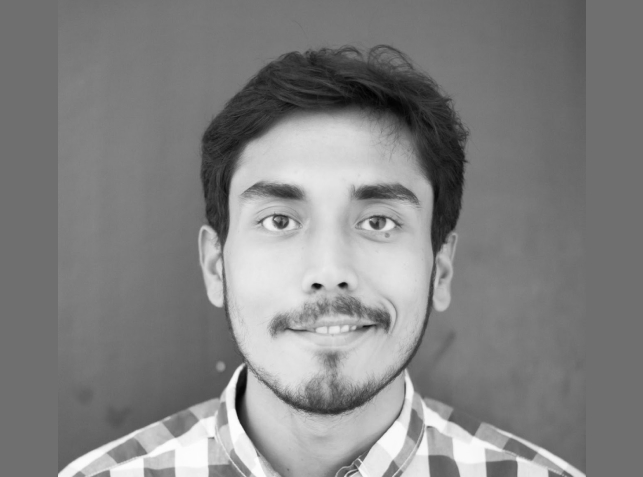
Akib Khan
Akib Khan is a Postdoctoral Fellow at the House of Sustainable Society at the Stockholm School of Economics. His research examines human capital investments in developing countries and international migration. His work spans early-childhood interventions delivered through public systems in Bangladesh, the effects of immigration policy on skilled migrants’ integration in Sweden, and the interaction of experiential and social learning in household water chlorination in Pakistan. Current projects study the impact of home-country conflict on diaspora populations, the human capital costs of artisanal mining booms in sub-Saharan Africa, and community sponsorship models for refugee integration.
Follow Akib on
Website
Follow Akib on
Website
Akib Khan is a Postdoctoral Fellow at the House of Sustainable Society at the Stockholm School of Economics. His research examines human capital investments in developing countries and international migration. His work spans early-childhood interventions delivered through public systems in Bangladesh, the effects of immigration policy on skilled migrants’ integration in Sweden, and the interaction of experiential and social learning in household water chlorination in Pakistan. Current projects study the impact of home-country conflict on diaspora populations, the human capital costs of artisanal mining booms in sub-Saharan Africa, and community sponsorship models for refugee integration.
In their own words…
IEA – Could you walk us through the key moments that shaped your path – from your earliest exposure to economic thinking to what sparked your interest in the field, and ultimately what drew you to academic research?
Akib – Originally, I wanted to study literature, but realized that might not be the wisest choice if I wanted to pay bills. Economics seemed like it could solve that problem, and I hoped I could still pursue literature on the side. Two professors at the University of Dhaka changed those preferences: SM Ashiquzzaman and Atonu Rabbani. Both were instrumental in showing how economics helps us understand choices across diverse contexts. I also came to realize that all the literature I loved had good economics in it, and all the great works of economics had good stories. That is what drew me to academic research. Every human being is trying to understand why we (especially others) behave the way we do, and I was drawn to the framework and the tools economists use to pursue that question.
IEA – Your research examines how early-life human capital interventions can be delivered at scale through existing public systems in developing countries. Based on your findings, what determines whether these interventions generate lasting impacts, and how should governments rethink program design to move from small-scale success to system-wide effectiveness?
Akib – The meta-point I want to highlight first is that it was the existence of the public infrastructure with community health workers that made the intervention we study possible at all — which underscores the importance of thinking about systems rather than individual interventions. Governments need platforms that can enable, sustain, and adapt useful services over time.
On the intervention itself: the short-term gains we documented came from facilitating parental engagement with children through actionable information and resources — picture books, and guides suggesting ways to better stimulate early development — delivered through trusted providers that families had already interacted with in the domain of child health. One open question is what happens next, as these children grow up. Can formal schooling systems in low-income settings build on early gains? We are planning to follow up with these children ten years after the first wave.
In terms of program design, the broader lesson is to use existing public infrastructure to introduce complementary services rather than building separate vertical programs. In designing early childhood development infrastructure from scratch, one can plan ahead so that each element can be leveraged later to introduce additional components. The goal should be to build adaptive systems — not bespoke programs targeting narrow outcomes.
IEA – In your paper “Permanent Residency Policy and Skilled Immigration: Evidence from a Swedish Reform,” you examine how easing the path to permanent residency for international PhD students affects settlement decisions and integration outcomes. What do your findings reveal about how immigration policy shapes skilled migrants’ long-term human capital investment and integration?
Akib – The reform had a substantial positive effect on international PhD students’ likelihood of remaining in Sweden long-term. Anticipating better prospects for permanent residency (PR), students made integration investments during their PhD — in language acquisition and neighborhood choice. Ongoing extensions of this work suggest the reform also increased the likelihood of these students staying in academia, either in Sweden or elsewhere in the EU, a pathway likely enabled by the PR and citizenship it facilitated. We also find positive spillover effects to their native and European peers, through the formation of new co-authorship relationships during and after the PhD.
Taken together, these findings suggest that immigration policy can be a potent tool for countries seeking to retain skilled immigrants — particularly for their academic and scientific communities.
IEA – In “Beyond the Battlefield: The Impact of War on Expatriates’ Health and Livelihoods,” you show that home-country conflict can worsen migrants’ mental health while simultaneously increasing their labour supply. In the context of ongoing global conflicts, what broader lessons does this offer for understanding how diaspora communities respond economically and socially to crises in their home countries?
Akib – The findings underscore that war — however geographically distant — shapes the choices of diaspora communities. Migrants are part of transnational households that straddle borders, retaining social and financial ties to their origin countries and offering a form of insurance to those left behind in times of crisis. In an age of near-frictionless communication, travel, and trade, the macroeconomic effects of conflict — through prices, disrupted supply chains, and displacement — are compounded by the direct ways expats remain connected to their origins. That connection shows up in health, labour market engagement, and political activities.
The policy dimension matters too. In the context we study — the 2022 Russian invasion of Ukraine — Sweden and other OECD countries were relatively open to Ukrainian refugees seeking asylum. We find this openness attenuated some of the adverse mental health effects on the incumbent Ukrainian expat population, suggesting that destination countries’ migration and refugee policies are themselves a meaningful part of the diaspora response to war. Overall, these findings argue for treating diaspora communities as an important dimension of any serious accounting of the ramifications of armed conflict in a globalized world.
IEA – How has your personal background influenced your research perspectives, particularly in human capital and migration economics?
Akib – Human capital is central to how I see development economics: How do societies expand human capabilities at scale? What economic, political, and social arrangements generate what I’d call credible hope — the genuine chance to discover one’s talents, develop them, deploy them productively, and weather misfortune? And, migration expands the opportunity set for people to find and realize that credible hope beyond their country’s borders.
I was born and raised in Dhaka. I moved to Lusaka to work for IDinsight and then migrated to Sweden to do the PhD, where I still live and work. The longer I have been here, the more I have come to appreciate two things that sit in some tension: the extraordinary grit and creativity that people in Bangladesh exhibit under the weight of persistent constraints, and the stubborn waste of potential as we fail generation after generation to reach and expand their possibility frontier. Migration offers an exit for a small share, but that comes very late. And even after migration, many compromise on reaching their full potential as they have to prioritize residence or financial certainty, often exacerbated by restrictive and unpredictable migration policies at destination.
These observations have obviously shaped the questions I choose to study and think about, but I have a long way to go to do justice to the broader questions around the understanding of the systemic elements that shape persistent changes – social, economic or political – that help people thrive.
IEA – What concrete steps do you think the economics field should take to become more inclusive and representative of diverse global challenges?
Akib – My thoughts here are still evolving, not least because the research production function is undergoing rapid change, but let me separate two dimensions.
On the who: we need more people who can ask questions rooted in context and broader in scope. The profession’s research agenda is tilted toward contexts and populations that are already well-studied (both within and across borders) — partly because that’s where the data and institutional access are, but partly because that’s who has historically been in the room. People who have grown up in or worked closely with underrepresented settings may be more likely to notice the questions that matter there, and to have the credibility and networks to pursue them. As AI tools reduce the cost of execution, the comparative advantage of asking the right question grows — and that’s where diversity of background can pay off most.
On the how: we should be willing to take more risks in recruitment, staying open to candidates who may lag in formal preparation but bring new perspectives. RA-ships are a natural place to take these bets. Economics is probably well-positioned here: unlike resource-intensive disciplines where, for instance, lack of lab access might be a hard constraint, our barriers are more malleable. And as AI tools reduce the burden of coding and project management, we have more room to pay attention to what questions these RAs are interested in, why, and how they might go about answering them should they choose to stay in academic research.