
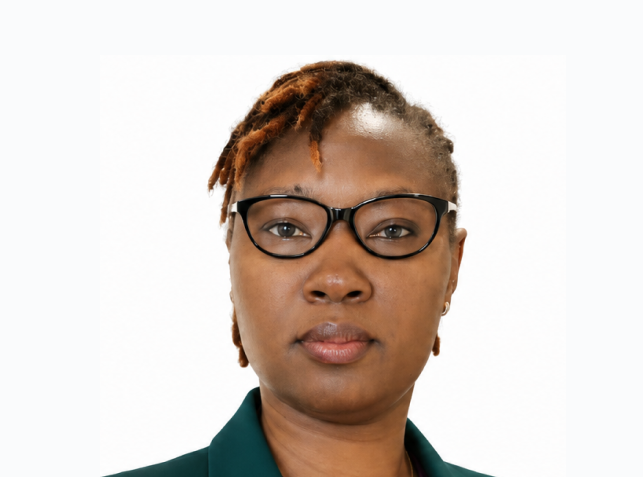
Pouirkèta Rita Nikiema
Dr. Pouirkèta Rita Nikiema is a development economist and Lecturer-Researcher at Université Norbert Zongo, Burkina Faso. She holds a Ph.D. in Applied Economics from the Inter-University Graduate Program (PTCI) at Université Cheikh Anta Diop in Dakar, Senegal, a Master’s degree in Human Resources Economics from Université Thomas Sankara, Burkina Faso. Her research focuses on education economics, health and nutrition, gender and development, youth employment, financial inclusion, and impact evaluation. Beyond academia, Dr. Nikiema has significant experience collaborating with international institutions, including the World Bank and the United Nations Economic Commission for Africa (UNECA), contributing to policy-oriented research and impact assessments. Her work has been supported by numerous competitive grants and fellowships from institutions such as J-PAL, PEP, AERC, and UNU-WIDER. She is affiliated with academic and professional networks, such as the Association for the Advancement of African Women Economists (AAAWE), the African Growth and Development Policy Modelling Consortium (AGRODEP), and the Pan-African Research Center for Economic and Social development (CARDES).
Follow Pouirkèta on
Website
Follow Pouirkèta on
Website
Dr. Pouirkèta Rita Nikiema is a development economist and Lecturer-Researcher at Université Norbert Zongo, Burkina Faso. She holds a Ph.D. in Applied Economics from the Inter-University Graduate Program (PTCI) at Université Cheikh Anta Diop in Dakar, Senegal, a Master’s degree in Human Resources Economics from Université Thomas Sankara, Burkina Faso. Her research focuses on education economics, health and nutrition, gender and development, youth employment, financial inclusion, and impact evaluation. Beyond academia, Dr. Nikiema has significant experience collaborating with international institutions, including the World Bank and the United Nations Economic Commission for Africa (UNECA), contributing to policy-oriented research and impact assessments. Her work has been supported by numerous competitive grants and fellowships from institutions such as J-PAL, PEP, AERC, and UNU-WIDER. She is affiliated with academic and professional networks, such as the Association for the Advancement of African Women Economists (AAAWE), the African Growth and Development Policy Modelling Consortium (AGRODEP), and the Pan-African Research Center for Economic and Social development (CARDES).
In their own words…
IEA – Could you walk us through the key moments that shaped your path – from your earliest exposure to economic thinking, to what sparked your interest in the field, and ultimately what drew you to academic research?
Pouirkèta – When I was young, my dream was to study medicine to heal people, and my father’s wish was to see his daughter become a medical doctor. But circumstances led me into economics. During my undergraduate studies, I realized that economics wasn’t just about money, but about human behaviour, incentives, and how society allocates scarce resources. What sparked my deep interest in the field was its incredible versatility. Economics allows me to explore and to engage with other disciplines. The more I studied, the more I wanted to use analytical tools to find actual solutions to real-world problems. I see economics as a powerful framework for analyzing issues like poverty, gender inequality, and development. Ultimately, what drew me to academic research was the desire to go beyond general observation and contribute to evidence-based solutions. I want to use rigorous quantitative methods to evaluate which policies actually lift communities out of poverty, as economics enables me to reach related fields such as education, health, and labour. That is why I am so eager to join this research world. It was during the writing of my master’s thesis that I developed a passion for research. I chose to study and work in development economics to contribute to development, particularly human capital development, in my country, and for me, research and teaching are the major tools I can use to reach my objectives. I realized that economics could also be a way to help heal the world, and I think that I have found the best place to do it in academic research.
IEA – Your research links women’s land access to improved child nutrition in rural Burkina Faso. What policy mechanisms would you recommend to strengthen women’s land rights in contexts where customary tenure systems often restrict them?
Pouirkèta – This study shows that women’s access to land remains limited, insecure, and largely mediated by customary systems, which means effective policy responses must operate simultaneously across legal, institutional, and social dimensions. First, formalization and legal reform are essential: expanding land certification and titling programs that explicitly include women—whether through individual or joint titles—can significantly strengthen tenure security, with evidence indicating that formal documentation also contributes to reductions in child malnutrition. Second, reforms to customary tenure systems are critical; rather than bypassing them, policymakers should engage traditional authorities to codify and legitimize women’s land rights within existing frameworks, especially given that prevailing norms continue to restrict women’s ownership and control despite their central role in agriculture. Third, strengthening women’s bargaining power is key, including promoting collective ownership models such as women’s cooperatives and improving access to credit and agricultural inputs linked to land access, since secure land rights enhance women’s decision-making power and investment in child welfare. Finally, these efforts must be supported by complementary institutional measures, including legal aid services and awareness campaigns to help women understand and claim their rights, as well as gender-sensitive land administration systems.
Overall, the evidence underscores that land rights are not only a matter of agricultural productivity but also a crucial pathway to improved child nutrition through enhanced food security and more equitable intra-household decision-making.
IEA – Your study found that school feeding programmes increased attendance and girls’ enrolment in northern Burkina Faso — but given persistent barriers like early marriage and household work duties, how far can feeding programmes alone go, and what complementary interventions are needed to sustain girls’ education beyond primary school?
Pouirkèta – School feeding programs create strong incentives for families to send their children, especially girls, to school. My study indicates that school feeding programs play an important role in improving attendance and increasing girls’ enrolment by alleviating short-term, demand-side constraints such as hunger and the immediate direct costs of schooling. However, school feeding programs are not sufficient on their own. Indeed, these programs do not address deeper structural and socio-cultural barriers that continue to limit girls’ education. Feeding initiatives do not challenge entrenched norms around early marriage, nor do they reduce the disproportionate household labour burdens placed on girls, and their positive effects may diminish beyond the primary level. To achieve sustained and equitable educational outcomes, feeding programs must be complemented by broader interventions. These include efforts to address socio-cultural barriers through community campaigns that promote delayed marriage and stronger enforcement of minimum marriage age laws; measures to reduce the opportunity costs of schooling, such as conditional cash transfers and subsidies for uniforms, transport, and secondary education; improvements in school accessibility through the expansion of rural secondary schools and the provision of safe transport or boarding facilities; and investments in basic infrastructure like water and energy to ease domestic workloads. Overall, while school feeding programs are effective entry points, they should be embedded within a comprehensive, gender-sensitive education strategy to produce a lasting impact.
IEA – Your paper argues that education expands women’s economic opportunities in Southern Africa — but given the persistent structural barriers you identify, how much of the gap in women’s labour market outcomes can education alone close, and what else needs to change?
Pouirkèta – Education constitutes a central foundation for individual development and access to opportunity. Evidence from Southern Africa and the broader literature shows that while education is a critical driver of women’s economic participation, it is not sufficient on its own to ensure equality in labour market outcomes. Education is strongly associated with higher labour force participation and improved employability, as it equips women with skills that facilitate their transition into formal sector jobs. It also contributes to enhanced household welfare and better outcomes for children. However, significant constraints persist. Social norms and entrenched gender roles continue to limit women’s opportunities, as responsibilities related to marriage, fertility, and childcare reduce participation, while male dominance and cultural expectations restrict occupational choices. Structural barriers in the labour market further compound these challenges, with women often concentrated in informal, low-paying sectors and facing limited access to quality employment even when educated. At the household level, the presence of young children and larger family sizes significantly reduce women’s labour supply. Consequently, while education can help close gaps in skills and access to formal employment, achieving full gender equality requires complementary interventions, including the expansion of childcare systems, labour market reforms, shifts in social norms, and improved access to productive assets such as land. As widely noted in the literature, education is therefore only one of many factors influencing women’s labour supply.
IEA – How has your personal background influenced your research perspectives, and what concrete steps do you think the economics field should take to become more inclusive?
Pouirkèta – My personal background, along with my experiences living and working in diverse environments, has shaped my research perspective, leading me to recognize that economic policies cannot be ‘one-size-fits-all.’ Coming from a context where economic challenges are not abstract concepts but lived realities, I have developed a strong sensitivity to issues such as inequality, access to opportunities, and the real-world impact of policy decisions. This perspective pushes me to prioritize research questions that are not only theoretically relevant but also socially meaningful and grounded in the experiences of underrepresented communities. To make the field of economics more inclusive, several key steps are essential. First, diversifying the pipeline requires increased funding and mentorship opportunities for scholars from the Global South, alongside stronger support for regional research institutions such as the African Economic Research Consortium (AERC), the Partnership for Economic Policy (PEP). Second, broadening research agendas involves encouraging work on locally relevant issues—including land systems, agriculture, and gender norms—while placing greater value on policy-oriented and applied research. Third, improving data representation is crucial, which means investing in African datasets like LSMS and DHS extensions and promoting the systematic use of gender-disaggregated data. Fourth, academic structures must evolve to address barriers to publishing and collaboration, as well as to increase representation from underrepresented regions on editorial boards and at major conferences.