
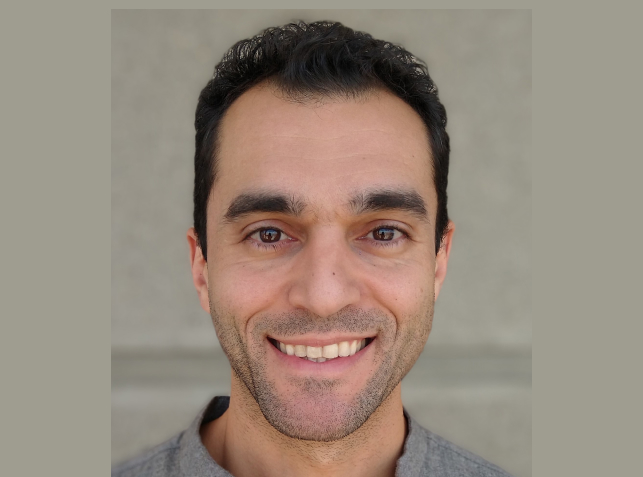
Rachid Laajaj
Rachid is an associate professor of Economics at the University of Los Andes in Bogotá. His primary areas of research are technology adoption in agriculture, corruption, human capital and altruism. He studies these issues from a micro-development perspective, both theoretical and empirical, paying particular attention to the role of information. A lot of his work evaluates what policies can best contribute to poverty alleviation, using most up to date evaluation methods. Rachid published in top economic journals, including Econometrica, AEJ: Applied, Journal of Development Economics, Journal of Public Economics Journal of Human Resources, etc. He received his PhD in Applied Economics from the University of Wisconsin Madison and did a post-doc at Paris School of Economics. He teaches Microeconomics, Impact Evaluation, Development Economics and Corruption in Developing Countries.
Follow Rachid on
Website
Follow Rachid on
Website
Rachid is an associate professor of Economics at the University of Los Andes in Bogotá. His primary areas of research are technology adoption in agriculture, corruption, human capital and altruism. He studies these issues from a micro-development perspective, both theoretical and empirical, paying particular attention to the role of information. A lot of his work evaluates what policies can best contribute to poverty alleviation, using most up to date evaluation methods. Rachid published in top economic journals, including Econometrica, AEJ: Applied, Journal of Development Economics, Journal of Public Economics Journal of Human Resources, etc. He received his PhD in Applied Economics from the University of Wisconsin Madison and did a post-doc at Paris School of Economics. He teaches Microeconomics, Impact Evaluation, Development Economics and Corruption in Developing Countries.
In their own words…
IEA – Could you walk us through the key moments that shaped your path –from your earliest exposure to economic thinking to what sparked your interest in the field, and ultimately what drew you to academic research?
Rachid – My parents migrated from Morocco to France, where I was born. Growing up, I spent many summers visiting my extended family in Morocco. They are Berbers from the Atlas Mountains, and some of them lived in quite poor rural areas, without access to electricity or running water until very recently. I remember that when we visited, we would bring them our old clothes; the following year, we would often see them wearing those clothes. Although my family was probably low income by French standards, I could not help thinking how lucky we were to have access to good living conditions and high-quality education by global standards. I also wondered what my life would have been like if my father had not decided to migrate many years earlier.
At university, I studied economics with only moderate interest at first. That changed when I went to CERDI (Centre d’Études et de Recherches sur le Développement International) in Clermont-Ferrand, where I became deeply passionate about development economics. Since then, I have felt very fortunate to spend my working life investigating how to improve living conditions in places like those I knew from my family visits, and how to reduce the consequences of the lottery of birth—the fact that a person’s destiny is so strongly affected by where they are born.
IEA – In your recent research on The Complexity of Multidimensional Learning in Agriculture, you argue that technology adoption among farmers is far more complex than simply introducing a new input or technique. Why do many agricultural interventions treat farmer learning as simpler than it actually is? and what does your research reveal about the role of experimentation, skills, and social learning in improving productivity?
Rachid – Part of the reason is that theoretical models often need to simplify reality. For good reasons, typical models have often considered the adoption of one input in isolation. They have been very useful in framing constraints to adoption, such as credit constraints, risk constraints, and information constraints. We build on this literature. But typical information-constraint models can be caricatured as if there were one input, such as fertilizer, that is clearly profitable and farmers simply need to try it and realize how good it is—or, in some cases, learn how to use it, for example by finding the right quantity to apply.
After doing fieldwork to learn about farmers’ knowledge, we realized that the problem is much more complex. In many cases, the best decision about one input or practice depends on the other decisions the farmer is taking. Every time farmers change an input or practice, they may also need to adjust many other aspects of their production system, and in the process they can make costly mistakes. This is especially true for sustainable agriculture, which tends to be more knowledge-intensive than capital-intensive. Environmentally friendly production systems such as silvopastoral systems, agroforestry, conservation agriculture, and others require adjusting multiple inputs and practices at once to find combinations that work locally.
One implication of our results is that farmers need guidance about which combinations are worth experimenting with, but local adaptation and fine-tuning still require farmers’ own experimentation. That experimentation improves with skills. We also find that the presence and experimentation of high-skilled farmers can benefit lower-skilled farmers, who may wait for high-skilled farmers to bear much of the cost of experimentation before adopting. Finding better ways to aggregate and share knowledge across farmers—for example through citizen-science initiatives—is a promising avenue to reduce the cost of experimentation.
IEA – Your research on the computerisation of imports in Colombia examines how customs digitalisation affected trade efficiency, tax collection, and corruption risks. What do your findings reveal about the economic costs of bureaucratic inefficiencies, and how important is administrative reform in strengthening state capacity and economic development?
Rachid – The main message is that bureaucracy at customs is not a small administrative inconvenience. It acts like a non-tariff barrier: it raises firms’ costs, creates uncertainty, opens space for corruption and affect firms’ growth.
In Colombia in the early 200o’s, the computerization of imports moved procedures online, reduced direct interactions between importers and customs agents, and replaced discretion with more systematic, risk-based controls. Reported imports rose by about 70 percent in reformed ports relative to unreformed ones, and tax collection increased by a similar amount. The evidence suggests it is due to more real growth and trade, less underreporting, and firms shifting toward computerized ports even when this meant higher transport costs, thus revealing their preferences for computerized ports.
The main contribution of the article is to show that the consequences of the reform go all the way down to firms’ production, employment and growth, with especially large gains for small and medium-sized importing firms. A key lesson is that such reforms that can reduce bureaucracy and corruption at customs can be win-win both in terms of growth and tax revenues and the benefits largely exceed its costs.
IEA – In your research on measuring skills in developing countries, you examine the challenges of applying standard cognitive and socio-emotional assessment tools in low-income rural settings. Could you briefly summarise your key findings and their broader implications? What does this tell us about the importance of context in development research and policymaking?
Rachid – Our work shows that measuring skills in low-income rural settings is not simply a matter of translating standard scales and provides practical lessons to measure cognitive, socio-emotional and agricultural knowledge. Cognitive measures worked relatively well: they were reliable, internally consistent, and predictive. Technical and socio-emotional measures generate more challenges.
For agricultural knowledge, many questions were noisy because it tries to capture a complex concept. They are informative, but obtaining a good proxy requires a large set of questions locally tested, being careful that the right answer often depends on soil, rainfall, crop mix, input availability, and other conditions.
For socio-emotional skills, the problem was more systematic: wording, response patterns, enumerator effects, and oral administration all affected answers, and the factors we recovered did not map cleanly onto personality constructs developed in high-income settings. This does not mean these skills are unimportant. Once we corrected measurement problems as much as possible, cognitive, technical, and noncognitive skills all helped explain agricultural productivity and practices. The lesson is that context matters for measurement itself. Applying some recommendations, together with fieldwork, piloting, local adaptation, repeated measures, and reliability checks should be central to research that require good skills measure.
IEA – How has your personal background influenced your research perspectives, particularly in areas such as technology adoption in agriculture, human capital, and corruption? As someone working across these issues, what concrete steps do you think the economics field should take to better address the diverse challenges faced by developing countries today?
Rachid – My origins have a direct influence on the way I choose research projects. With every new project, I ask whether it has a real potential to improve people’s lives, or whether I am only getting into it to play the academic game of trying to obtain publications and recognition. If it is the latter, it is not worth it.
I have worked on many topics—technology adoption in agriculture, human capital, corruption, and now altruism. For me, what they have in common is that I see a path from the research to policy recommendations that can have direct benefits in terms of poverty reduction and well-being.
For the economics field, I think this means taking context much more seriously. We need to invest more in fieldwork, in measurement, and in long-term collaborations with researchers and institutions in developing countries. We should also value research that solves important problems even when it does not fit the most fashionable method or setting. Finally, we should broaden the pipeline of economists and research assistants from developing countries; they are often best placed to notice the constraints that matter and to ask questions that outside researchers might miss.